
FDA QMSR Takes Effect June 28




On June 28, 2026, the FDA’s Quality Management System Regulation (QMSR) is set to fully take effect, replacing 21 CFR Part 820 and resetting the compliance baseline for high-risk active medical device manufacturers such as EO sterilization equipment and RF ablation electrode suppliers. For companies serving the U.S. market, this is not just a documentation update: it directly affects quality system reconstruction, regulatory submission readiness, importer acceptance, and exposure to FDA inspections, making it a practical issue for manufacturing, export, procurement, and delivery planning.
What the rule change formally requires
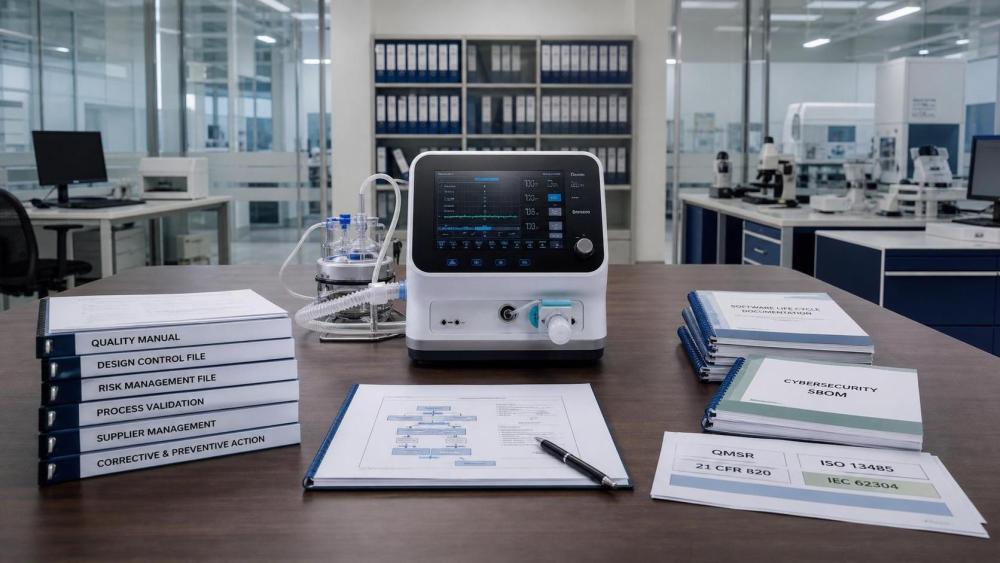
According to the provided event information, the FDA’s QMSR will be fully implemented on June 28, 2026, and will replace the current 21 CFR Part 820 framework. The rule requires manufacturers of high-risk active devices, including EO sterilization equipment and RF ablation electrodes, to rebuild their quality systems in line with ISO 13485:2016 together with FDA-specific additional requirements.
The same information states that affected manufacturers must provide complete process validation materials, software lifecycle documentation, and a cybersecurity SBOM. For exporters targeting the U.S. market, companies that do not complete the QMSR transition will be unable to submit 510(k) or De Novo applications. Products already on the market may also face importer rejection and FDA on-site inspection risk.
Where the pressure is likely to appear first
Manufacturing sites rebuilding quality systems
From an industry perspective, manufacturers are the first group directly affected because the change is tied to the structure and evidence base of the quality system itself. The practical impact is likely to fall on document control, process validation packages, software lifecycle records, and cybersecurity-related product documentation. What deserves closer attention is whether internal quality documentation and product files are aligned with the new submission and inspection expectations described in the event summary.
Export teams and U.S.-facing market access work
For export-oriented businesses, the main issue is market access continuity. Analysis shows that the inability to complete the QMSR conversion would affect not only future 510(k) or De Novo filing plans, but also the commercial handling of products already in circulation if importers become unwilling to receive them. In this context, regulatory affairs, trade documentation, and customer communication functions are likely to become more tightly linked than before.
Importers, distributors, and downstream buyers
Observably, downstream market participants may face a higher need to review supplier readiness. Where importer rejection risk is explicitly mentioned, distributors and procurement-side buyers may need to pay closer attention to whether suppliers can provide the required validation records, software lifecycle documentation, and cybersecurity SBOM as part of qualification, onboarding, or delivery review. The impact here is less about product specification changes and more about documentary confidence and compliance traceability.
Testing, certification, and compliance support functions
Companies involved in testing, certification preparation, or compliance support may also see workflow changes, because the required evidence set described in the event summary is broader than a simple quality manual update. Analysis shows that document completeness, consistency across technical files, and readiness for regulatory review are likely to become more important in supplier selection and project scheduling, especially where U.S.-bound products are involved.
Operational priorities companies should watch now
Check whether the transition scope is truly complete
Analysis shows that companies should focus not only on whether a quality system has been updated in name, but also on whether the transition covers the full structure required under ISO 13485:2016 plus FDA-specific additions. For affected product categories, incomplete conversion may create immediate constraints for regulatory submissions and broader commercial risk for U.S.-bound shipments.
Review technical files tied to validation and software
What deserves closer attention is the completeness of process validation records and software lifecycle documentation. The event summary makes these materials part of the compliance expectation, so manufacturers and exporters should closely review whether technical documentation can support both filing activities and inspection-facing review, rather than treating them as separate workstreams.
Do not treat cybersecurity SBOM as a side document
Observably, the explicit inclusion of a cybersecurity SBOM signals that product documentation expectations are extending into software and cybersecurity governance. Companies involved in product design, regulatory submission, and after-sales quality traceability should therefore watch whether existing documentation processes can generate and maintain this material in a form acceptable for U.S.-market compliance use.
Align delivery, procurement, and customer communication
From an industry perspective, the rule change may affect delivery timing and supplier qualification if compliance conversion is not yet settled. Exporters, importers, and procurement teams should pay attention to document requests, qualification checkpoints, and shipment readiness discussions, particularly where customers or channel partners ask for proof that the QMSR transition has been completed.
Why this reads as an execution signal
Analysis shows that this development is better understood as an implementation-stage compliance change rather than a distant policy direction. The date is explicit, the replacement of 21 CFR Part 820 is explicit, and the consequences for filing eligibility and market handling are also explicitly stated in the provided information. At the same time, it remains necessary to observe how market participants interpret documentary sufficiency in practice, especially around validation depth, software lifecycle evidence, and cybersecurity SBOM presentation.
Observably, the most important near-term question is not whether the rule matters, but how consistently it will be reflected in submission preparation, importer review behavior, and FDA inspection expectations. That makes this a live execution issue for affected manufacturers and export-facing businesses, while still leaving room for continued observation of practical enforcement signals.
How the market should frame this development
At this stage, it is more appropriate to understand the June 28, 2026 QMSR effective date as a concrete compliance threshold for affected high-risk active devices, not merely a background regulatory update. The immediate relevance lies in quality system reconstruction, document readiness, and the ability to sustain U.S.-market access without disruption. A rational reading is that companies should treat this as a rule already entering operational reality, while continuing to watch for how execution standards are reflected in filings, inspections, trade handling, and customer-side document requests.
Basis of this article and what still needs verification
This article is generated based on the user-provided news title, event date, and event summary. For events of this kind, commonly relevant source types may include official regulatory announcements, releases from supervisory authorities, trade or customs-related notices, industry association updates, standard-setting documents, and reporting by authoritative industry media.
No specific official source link was provided in the input, so the exact official publication path remains to be further verified. Continued observation is still needed regarding detailed implementation language, certification and compliance interpretation, changes in tender or procurement documents, market feedback, and how companies actually complete the transition in practice.
Related News
 MDR/FDA Regs & UDI TrackingMedical Biocompatibility Testing for Catheters: What ISO 10993 RequiresMedical biocompatibility for catheters: understand ISO 10993 requirements for finished devices, chemical risks, sterilization, and targeted testing.Sep 19, 2026Author:Dr. Clara Vance
 MDR/FDA Regs & UDI TrackingDoes a Catheter Material Change Require an EU MDR Technical File Update?Does a catheter material change affect the EU MDR technical file? Explore key compliance risks, testing needs, technical documentation updates, and Notified Body considerations.Sep 18, 2026Author:Dr. Clara Vance
 MDR/FDA Regs & UDI TrackingWhat Quality Records Should a Medical Tubing Supplier Provide?What quality records should a medical tubing supplier provide? Discover essential lot traceability, material, inspection, sterilization, and change-control documents for confident supplier qualification.Sep 18, 2026Author:Dr. Clara Vance



Related News
- 00
0000-00
How to Select a High-Frequency Electrosurgery Unit for OR Procedures and Safety Needs - 00
0000-00
How to Evaluate Thermal Spread in Vessel Sealing Devices for Safer Tissue Dissection - 00
0000-00
Medical Biocompatibility Testing for Catheters: What ISO 10993 Requires - 00
0000-00
How to Qualify Tyvek Packaging Suppliers for Sterile Medical Device Programs - 00
0000-00
Does a Catheter Material Change Require an EU MDR Technical File Update?
Dr. Clara Vance
Weekly Insights
Stay ahead with our curated technology reports delivered every Monday.