
FDA Tightens EO Sterilization Inspection Rules




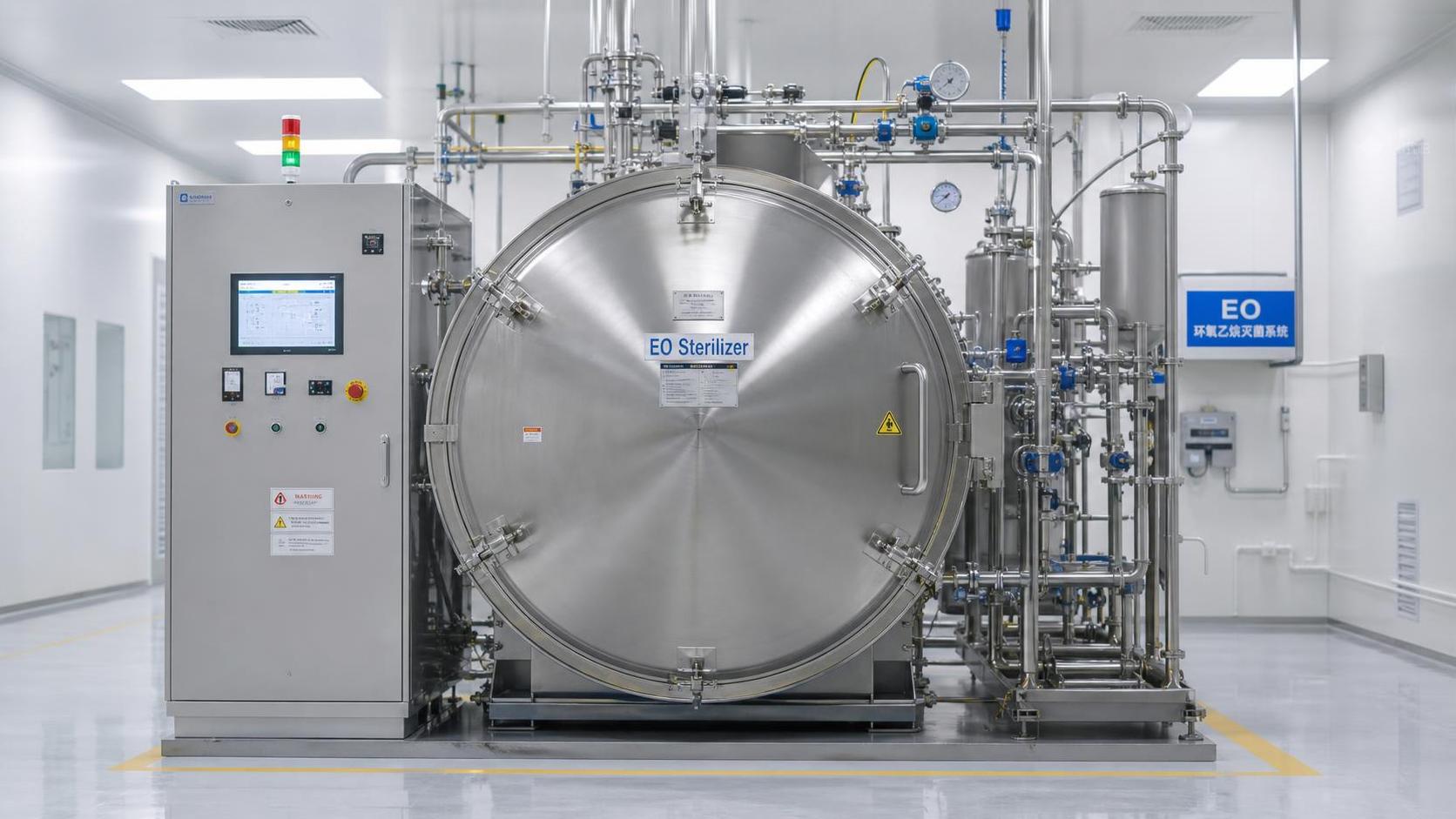
On June 17, 2026, a new compliance signal emerged for companies involved in EO sterilization and medical device export: FDA on-site inspections for Industrial EO Sterilizers will begin applying the updated Sterilization Process Validation Guidance v3.1 from July 2026. The change matters because it does not stay at the level of technical wording; it reaches validation records, audit readiness, export documentation, and delivery continuity for Chinese EO sterilization providers and device manufacturers that outsource sterilization.

What has been formally communicated
According to the information provided, Dr. Zhaochen Sa, Director of the FDA China Office, formally stated at a CPHI international regulatory Q&A session on June 17 that on-site inspections of Industrial EO Sterilizers will adopt the new Sterilization Process Validation Guidance v3.1. The announced focus areas are stricter control of ethylene oxide residue limits, the cycle requirements for biological indicator challenge testing, and the traceability of environmental monitoring data.
The same information indicates that the requirement directly affects Chinese EO sterilization service providers and medical device exporters that rely on outsourced sterilization. Where compliance is not achieved, the stated risks include 510(k) deficiency requests, failure in CE MDR audits, and suspension of orders.
Where the pressure is likely to appear first
Validation-dependent sterilization service providers
For EO sterilization contractors, the immediate issue is not only inspection frequency but inspection depth. Because the updated guidance emphasizes residue limits, biological indicator challenge intervals, and environmental monitoring traceability, these operators will need to pay close attention to whether their validation files, routine records, and retrievable monitoring histories are aligned with the new inspection focus.
Medical device exporters using outsourced sterilization
For exporters, the impact is likely to concentrate on submission support, audit coordination, and shipment continuity. If a contracted sterilization site cannot demonstrate compliant validation and traceable records, the exporter may face pressure in 510(k) follow-up responses, CE MDR audit preparation, and customer confidence in release documentation. In practice, this makes supplier qualification and sterilization file review more critical than before.
Procurement and supply chain coordination teams
For procurement and supply chain functions, the change may affect vendor selection, delivery scheduling, and contingency planning. Analysis shows that when inspection standards shift at the sterilization stage, buyers and operations teams need to examine whether supplier documentation, validation support, and release timing remain stable enough for export commitments and customer delivery plans.
Testing, certification, and audit support activities
Entities involved in testing support, certification preparation, or audit response may also see a narrower tolerance for incomplete documentation. From an industry perspective, what deserves closer attention is the connection between sterilization validation evidence and broader compliance packages, especially where residue control, challenge testing cycles, and environmental monitoring records form part of external review expectations.
What companies should monitor now
Check whether sterilization files can withstand closer review
Observably, companies should first revisit the documentation chain tied to outsourced or in-house EO sterilization, especially validation reports, monitoring records, and traceability materials connected to the newly highlighted inspection points. This is not yet the same as a confirmed enforcement outcome for every case, but it is a clear signal that documentation robustness is becoming more important.
Reassess supplier qualification and audit readiness
Where sterilization is outsourced, companies should pay attention to whether current suppliers can support FDA-facing reviews and related external audits with consistent records. What deserves closer attention is not only technical compliance, but also whether supplier responses can support export dossiers, customer audits, and delivery commitments without last-minute gaps.
Watch for knock-on effects in certification and order execution
Analysis shows that the stated risks of 510(k) deficiency requests, CE MDR audit failure, and order suspension make this a cross-functional issue. Regulatory, quality, procurement, and sales teams may all need to review whether existing project timelines, document packs, and release assumptions still match the compliance expectations signaled by the updated guidance.
Follow subsequent wording and implementation signals
The provided information confirms the new inspection focus and the planned enforcement timing, but it does not provide fuller implementation detail. It is therefore more appropriate to monitor subsequent official wording, audit interpretation, and market-side execution signals rather than assume a uniform enforcement pattern across all facilities and projects at this stage.
Why this reads as an enforcement signal
From an industry perspective, this development is better understood as an execution-oriented regulatory signal than as a general policy discussion. The reason is that the communication links a named validation guidance update with a defined inspection scenario and explicit business risks. At the same time, analysis shows that the market still needs to observe how inspection expectations are reflected in actual audit practice, submission reviews, and customer-side qualification requirements.
How to interpret the announcement at this stage
A rational reading of this update is that EO sterilization compliance is moving closer to document-level and traceability-level scrutiny in FDA inspection settings from July 2026. It should not be overstated as a final outcome for every exporter or sterilization contractor, but it is strong enough to warrant immediate internal review of sterilization validation support, supplier readiness, and export compliance coordination.
Basis of this article
This article is generated from the user-provided news title, event time, and event summary. Typical source types relevant to developments of this kind may include official notices, regulatory agency communications, trade or customs authority information, industry association releases, standard-setting documents, and reporting by established professional media. A specific official source link was not provided in the input, so further verification is still needed. It remains necessary to continue watching for implementation details, certification interpretation, changes in tender or customer documentation requirements, industry feedback, and how affected companies execute against the new inspection expectations.
Related News
 Industrial EO SterilizersEO Sterilization Equipment Price: What Drives Cost in Medical and Industrial Use?EO sterilization equipment price varies by cycle speed, safety systems, compliance support, and total ownership cost. Discover what really drives value in medical and industrial use.Aug 14, 2026Author:Sterilization Dynamics Strategist
 Industrial EO SterilizersHow to Evaluate Ultrafiltration Membranes in Japan for Stable Water Treatment PerformanceUltrafiltration membranes Japan evaluation guide: compare flux stability, fouling resistance, cleaning recovery, and supplier quality to choose reliable water treatment performance.Aug 13, 2026Author:Sterilization Dynamics Strategist
 Industrial EO SterilizersHow to Evaluate Hollow Fiber Ultrafiltration Membranes for Water Treatment SystemsUltrafiltration membranes hollow fiber evaluation starts with real water treatment demands. Learn how to compare flux stability, fouling resistance, integrity, and lifecycle cost.Jul 23, 2026Author:Sterilization Dynamics Strategist


Related News
- 00
0000-00
Sterility Maintenance in Medical Packaging: Seal Integrity and Shelf-Life Validation - 00
0000-00
How Hollow-Fiber Dialysis Membrane Pore Structure Affects Solute Clearance - 00
0000-00
How GPO Volume-Based Procurement Lowers Consumable Costs Without Raising Supply Risk - 00
0000-00
Sterile Packaging for Infection Prevention: Validation Requirements and Barrier Risks - 00
0000-00
Medical Polymer Leachables Risk: How to Build an FDA-Ready Assessment Plan
Sterilization Dynamics Strategist
Weekly Insights
Stay ahead with our curated technology reports delivered every Monday.