
Thailand Clears 7 Premium Dental Clinics




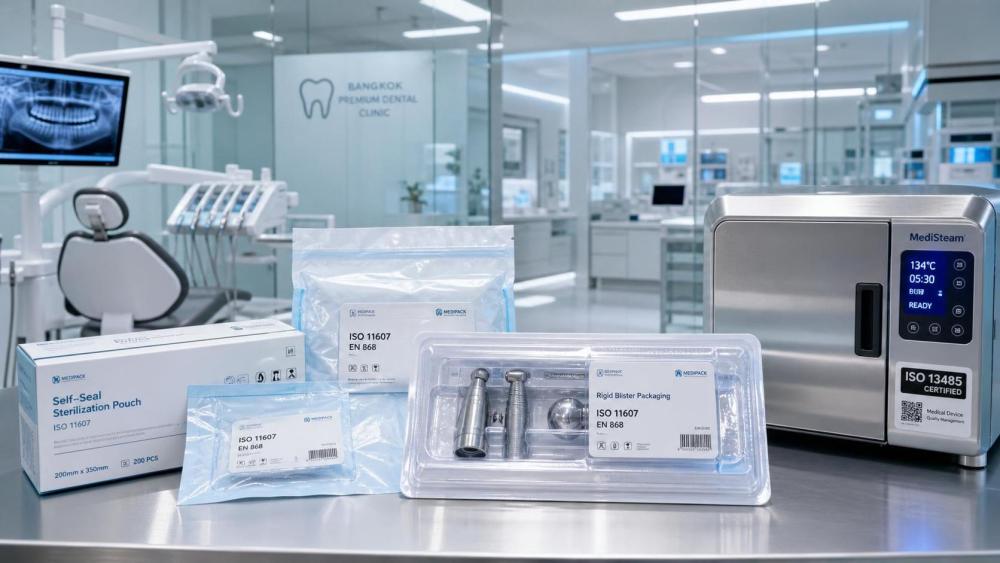
On August 11, 2026, Thailand’s Department of Medical Sciences under the Ministry of Public Health announced seven approved premium medical clinics (PMC) and after-hours specialist clinics (SMC), including a dental institute and Rajavithi Hospital. For suppliers of medical dressings, sterile barrier systems, and sterilization-related products, the development is worth close attention because procurement for these approved facilities is tied to ISO 11135, ISO 11607, and Thai FDA registration requirements. In practical terms, this turns a clinic approval list into a more visible market-entry channel for compliant exporters targeting high-end private medical end users.
What the Announcement Formally Confirms
The confirmed facts are limited but commercially meaningful. Thailand’s Department of Medical Sciences published, on August 11, 2026, a list of seven facilities approved to operate as premium medical clinics (PMC) and after-hours specialist clinics (SMC). The list includes institutions such as a dental institute and Rajavithi Hospital.
The announcement also makes clear that products procured by these facilities must meet ISO 11135 for EO sterilization, ISO 11607 for sterile barrier systems, and Thai FDA registration requirements. Based on the information provided, this approved list effectively creates a faster access route to high-end private healthcare end users for suppliers whose products already align with those compliance conditions.
Why This Matters Across the Supply Chain
Compliance-led exporters see a clearer demand signal
From an industry perspective, exporters of Tyvek medical sterilization pouches, Industrial EO Sterilizers, and Medical Rigid Blister Packaging are the most directly affected group. The reason is straightforward: the announcement links approved end users with specific compliance expectations, which can sharpen purchasing criteria. The immediate business impact is likely to appear in product qualification, technical documentation review, and customer engagement around regulatory fit.
Packaging and sterilization manufacturers face a more explicit entry threshold
Manufacturers involved in sterile packaging systems and EO sterilization-related equipment may be affected not simply because demand could emerge, but because the basis of supplier selection is more clearly framed. What deserves closer attention is that ISO 11135 and ISO 11607 are not general references here; they function as practical screening conditions tied to procurement access. For manufacturers, the relevant pressure points are validation alignment, packaging system conformity, and readiness for registration-related questions.
Procurement and channel partners may need tighter qualification workflows
Distributors, procurement intermediaries, and supply-chain service providers may also be influenced because clinic-side purchasing requirements can move upstream. Where this may show up is in supplier onboarding, product file review, and communication between overseas manufacturers and Thai-side buyers or registration stakeholders. The main change to watch is whether procurement discussions become more document-driven and less dependent on broad product positioning.
What Companies Should Track Now
Watch the wording around approved facilities and product scope
Analysis shows that the current signal comes from the combination of clinic approval and procurement conditions. Companies should therefore monitor whether future official wording further clarifies which product categories are covered in practice and how strictly the listed standards are applied in purchasing discussions.
Separate market signal from completed commercial conversion
It is more appropriate to understand this as a directional procurement signal rather than a completed sales outcome. A facility approval list can improve visibility for compliant suppliers, but it does not by itself confirm order volume, tender timing, or supplier selection results. Businesses should avoid treating the announcement as proof of immediate conversion.
Prepare documentation around standards and registration
For suppliers already targeting Thailand, the practical focus is likely to shift toward document readiness. That includes materials tied to ISO 11135, ISO 11607, and Thai FDA registration status. In commercial terms, this affects customer communication, qualification timelines, and the ability to respond quickly when buyers request proof of compliance.
Review fulfillment timing and customer-facing coordination
Even where product compliance is already in place, execution risk can still sit in delivery coordination, specification confirmation, and cross-border communication. Suppliers, channel partners, and service providers should pay attention to whether buyer expectations become more specific around submission files, product matching, and lead-time commitments.
How the Signal Should Be Read at This Stage
Observably, this development is more than a routine clinic list because it connects approved treatment facilities with named compliance standards and Thai FDA registration requirements. That gives the market a clearer reference point for who may buy and under what conditions.
At the same time, analysis shows it is still too early to frame this as a broad market shift. The current information supports a targeted interpretation: the announcement creates a more visible access path for compliant suppliers serving high-end medical end users, especially in dental and sterilization-related categories. Whether that path translates into sustained procurement momentum still requires continued observation.
A Targeted Opening, Not a Final Market Verdict
The industry significance of this update lies in its specificity. Rather than a broad policy narrative, the announcement points to a defined set of approved clinics and a defined compliance framework. For exporters of sterile packaging, EO sterilization systems, and related medical consumables, that is a practical signal with near-term commercial relevance.
Current interpretation should remain measured. It is more appropriate to understand this as a focused access-channel development and a compliance-based procurement cue, not as a confirmed expansion outcome across the whole market.
Basis of This Article and What Still Needs Verification
This article is based on the user-provided news title, event date, and event summary. The analysis was developed from the stated facts that Thailand announced seven approved PMC and SMC facilities on August 11, 2026, and that procurement for these facilities must comply with ISO 11135, ISO 11607, and Thai FDA registration requirements.
For this type of industry update, source categories typically worth checking include official government announcements, hospital or clinic notices, company disclosures, industry association materials, authoritative media reports, and relevant standards documentation. A specific official source link was not provided in the input, so the underlying announcement and any follow-up wording still need continued verification. The main points to monitor next are any further official clarification on procurement scope, product applicability, and operational follow-through in actual purchasing activity.
Related News
 Tyvek Medical PouchesHow to Qualify Tyvek Packaging Suppliers for Sterile Medical Device ProgramsTyvek packaging suppliers: learn how to assess material consistency, EO compatibility, change control, documentation, and supply resilience for sterile medical device programs.Sep 18, 2026Author:Sterilization Dynamics Strategist
 Tyvek Medical PouchesSterile Packaging for Infection Prevention: Validation Requirements and Barrier RisksInfection prevention sterile packaging: explore validation requirements, barrier risks, seal integrity, distribution testing, and shelf-life strategies for safer medical devices.Sep 11, 2026Author:Sterilization Dynamics Strategist
 Tyvek Medical PouchesISO 11607 Compliance for Sterile Pouches: Validation and Seal Integrity RequirementsSterile pouches ISO 11607 compliance: explore validation, seal integrity, sterilization, aging, distribution testing, and aseptic presentation requirements.Sep 03, 2026Author:Sterilization Dynamics Strategist


Related News
- 00
0000-00
EU MDR Clinical Evaluation Requirements: Evidence, CER Updates, and Compliance Gaps - 00
0000-00
Electrosurgical Safety Monitoring: How OR Teams Detect Return-Electrode Risks - 00
0000-00
How to Evaluate Surgical Stapler Cartridge Manufacturers for Quality and Supply Reliability - 00
0000-00
ASTM F1980 Accelerated Aging: Setting Shelf-Life Claims for Sterile Packaging - 00
0000-00
How European Hospitals Can Reduce Consumable Procurement Costs Without Supply Risk
Sterilization Dynamics Strategist
Weekly Insights
Stay ahead with our curated technology reports delivered every Monday.